Why We Built Mailtwine with Native JMAP Instead of Legacy IMAP
The 35-Year-Old Problem with IMAP
Internet Message Access Protocol (IMAP) was designed in 1986. While it has served the internet for decades, building real-time, event-driven AI applications on top of IMAP is an exercise in engineering compromise.
IMAP is chatty, connection-heavy, and relies heavily on polling. To check for new emails or changes, a client must issue multiple sequential commands across separate TCP connections. For modern AI email triage—where messages must be classified, summarized, and routed the instant they arrive—IMAP introduces latency, high battery drain, and frequent synchronization failures.
Enter JMAP: Modern, JSON-Native Email
JSON Meta Application Protocol (JMAP), standardized by the IETF in RFC 8620 and co-created by the team at Fastmail, completely reimagines email synchronization for the modern web:
- Single Transport: JMAP uses standard HTTP POST requests with structured JSON payloads, eliminating complex stateful socket handshakes.
- Batching: Multiple operations (fetching message bodies, applying labels, creating drafts) can be bundled into a single round-trip.
- Push Event Streams: Changes are pushed over lightweight EventSource (SSE) connections, notifying clients of incoming mail in milliseconds.
- Atomic Consistency: State changes are transactional, preventing duplicate rows or ghost unread counts.
How Mailtwine Leverages Native JMAP for Sub-Second Triage
Mailtwine is one of the few AI productivity platforms built with native JMAP integration from day one. Here is why that matters for users:
1. True Zero-Lag Triage
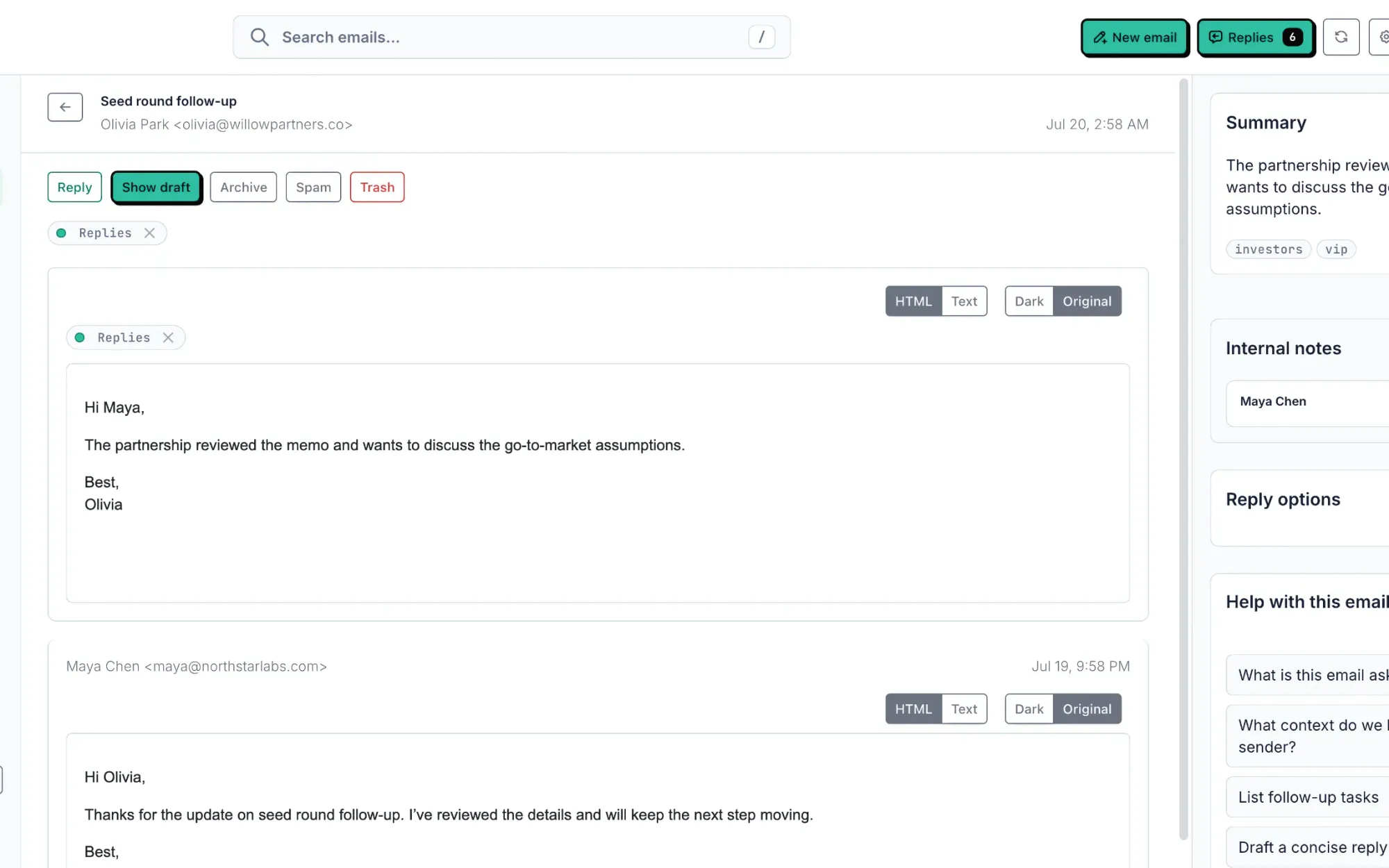
When an email lands in your Fastmail inbox, Fastmail pushes a JMAP event to Mailtwine. Within 300 to 500 milliseconds, Mailtwine's AI models analyze the message, calculate priority, assign labels, and stage a draft reply. Your queue is organized before your phone even buzzes.
2. Privacy-Preserving Scoped Tokens
JMAP authentication uses scoped API tokens with explicit capability boundaries. Users never enter their master account password into Mailtwine, and permissions can be revoked in one click from your Fastmail security dashboard.
3. Zero Battery and Server Overhead
By eliminating constant IMAP background polling, JMAP reduces server compute load and battery consumption on mobile and desktop clients alike.
Email Freedom Without Vendor Lock-In
Most AI email tools build proprietary walled gardens that force you into their closed client or lock you into Google Workspace. At Mailtwine, we believe in open standards. Whether your email runs on Google Workspace, Microsoft 365, Fastmail via JMAP, Helpmonks, or standard self-hosted mailboxes, you deserve intelligent triage without losing ownership of your data.
Experience the speed of modern email: Connect your Fastmail account to Mailtwine free during beta.